Horner’s Memories
Alice Scott

Alice Mary Ward

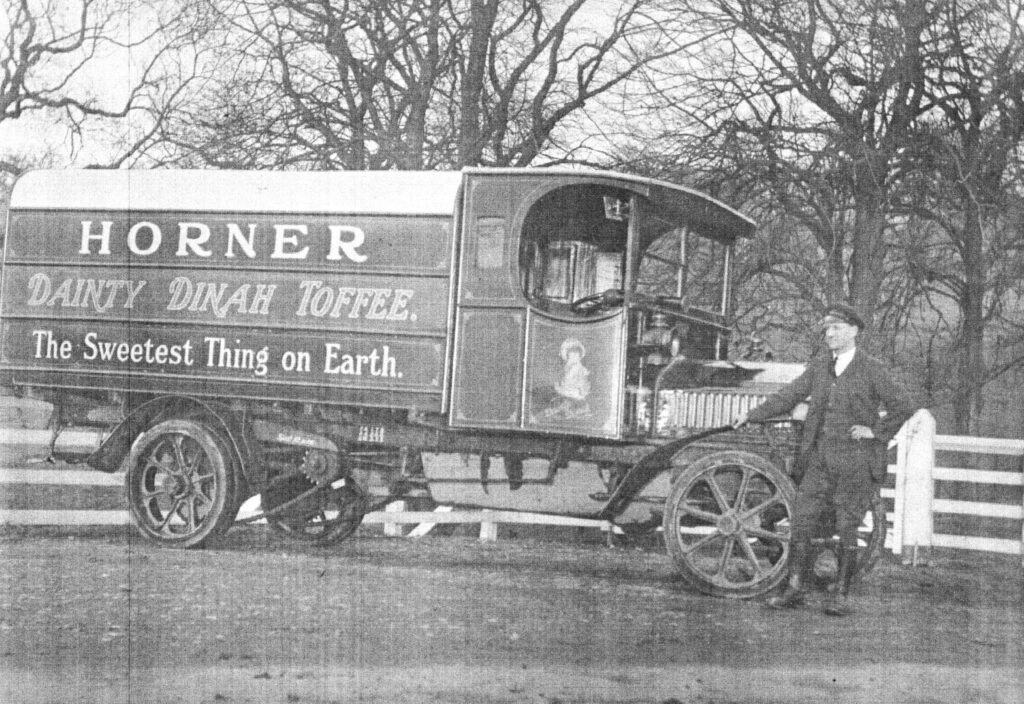
It was often thought that Alice was the inspiration behind the Dainty Dinah, however this was disputed by Alice in 1989 but did admit to dressing up as Dainty Dinah to promote the toffee. Regardless if she was or was not behind Dainty Dinah she was a remarkable young lady.
Alice was born on 12 August 1899 in Chester Moor to parents John William & Jane (nee Morris) Ward and baptised Alice Mary on 10 January 1900. She married William C Scott on 3 June 1922. When she died on 30 September 2001 aged 102 she was the town’s oldest resident, and is buried in Ropery Lane Cemetery.
In 1990 Gavin Purdon, a local historian compiled a history of Horner’s entitled “It Was Grand Toffee” in which he spoke to a number of ex employees of the factory and published their memories and recollections. Our thanks to Gavin in allowing us to use some of those stories.
The following is what Alice had to say about starting at Horner’s:-
“I worked there from 1916 to 1921 and I was Mr. Horner’s runabout. He’d advertised for a lady driver. Well people were shocked at the idea, but men were away at the War, the Great War that is, not the last one. It upset my mother very much, it wasn’t the done thing, girls wearing trousers.“
“When I went for the interview he never once asked me to sit down. Let me tell you this, Mr Horner was a perfectionist and he ruled his domain with a rod of iron. But the man at the bottom of him was very kind. There were no unions or anything like that, and he got his pound of flesh. Of course that’s
how he built his factory up.“
“So anyhow, I went for the situation. He said “I like you, you know” which I thought was very nice but then he said “But your background isn’t tough enough for what I’m wanting!” I was only half disappointed because the idea of me being a lady driver, there were no such things then, did upset my mother.“
“So anyway he says “Would you prove your toughness?” I said “In what way?” I was just turning sixteen but never stuck for something to say, and I think he liked that. He said “Would you go into the Boiling Room for a month?.” So I started in the Boiling Room where they made the Dainty Dinah. It had a stone floor and there were one, two, three, four vats, big boilers. The ingredients went in the glucose and that. When it was done a lever was pulled and the toffee poured into a bath. Two girls would get this bath and ran through a door and tipped it on a slab where it levelled off. Then it went through the rollers for cutting and wrapping.“
“As I said Mr Horner was a perfectionist. He wouldn’t have a sweet dropped or a sweet that wasn’t wrapped properly. That’s what made him a hard man to work for. But you could learn a lot from him. Anyhow he sent for me after about eight or ten days. He said he had found someone with a licence. I didn’t have one. Anyhow I was sent out with her, Aggie Critchley from Sacriston. Well she hadn’t done much driving but we set off in this little van up and around Stanley and Dipton. After a week she fell ill. So I said to Dicky White “I’ll take the job on.” He let me have a go and I saw to it and got the load off. I was there a few days when I got my licence. You had to go through to Durham and I had this form to fill. I said I was over sixteen which I wasn’t.“
Speaking to Gavin this is what Alice had to say about her driving tribulations.
“Once Mr Horner sent for me. I’d finished my work and he says “Alice, I’ve got a full load of Dainty Dinah to go to Sunderland. She’s having trouble so can you go with her to get the load off?” So I went with her. I thought the van was running badly. The engine was seizing. Well there were no dipsticks in my day you had little pliers, turned them and if the oil ran out you were alright. We were the pioneers.“
“I’ll tell you something funny. When I first knew Mr. Horner he kept pigs, would you believe. It was quite comical, because he sacked the fellow that was looking after them, then he didn’t know what to do with them.“
“Mr Horner rang me, he says, “Go to the carpenter and tell him to fix a van for pigs”. Then he rang the mart. When I went with the van he says, “Take her first”. By she was a big one and we got her in. Mind the squeals were awful. Then they fetched the piglets. Well they chewed my hair what a mess I was in, and my lovely leather driving coat. What a state I was, not to mention the van.“
Memories from Jenny Waugh
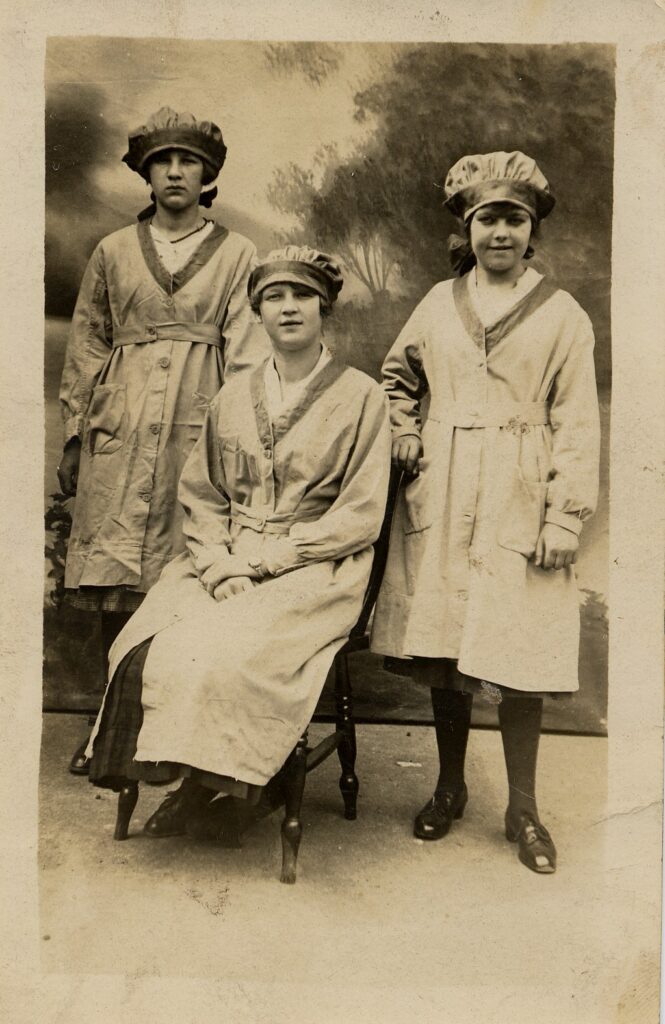
“They did a new line called Rich Assortment, and the Dainty Dinah’s were in all bonny coloured wrappers. I forget whether it was four pound or seven pound weight. They went into these nice pressed glass bowls, and you set it all out nice with the different colours all arranged so that it looked attractive. I did a lot of new lines. When there was a surplus of the glass bowls, Horner sold them off for sixpence each to the girls.”
“Years later at a white elephant stall I saw one. It was fifty pence. When I bought it I said to the lady “These used to be sold for sixpence”. She thought I was complaining and asked if fifty pence was too much. I said no I was just remembering. I got it for sentimental value. They didn’t have “Horner” or anything on, but I remember the design of them very well. They had a cover on the top to keep the sweets in. I packed many a one of them.”
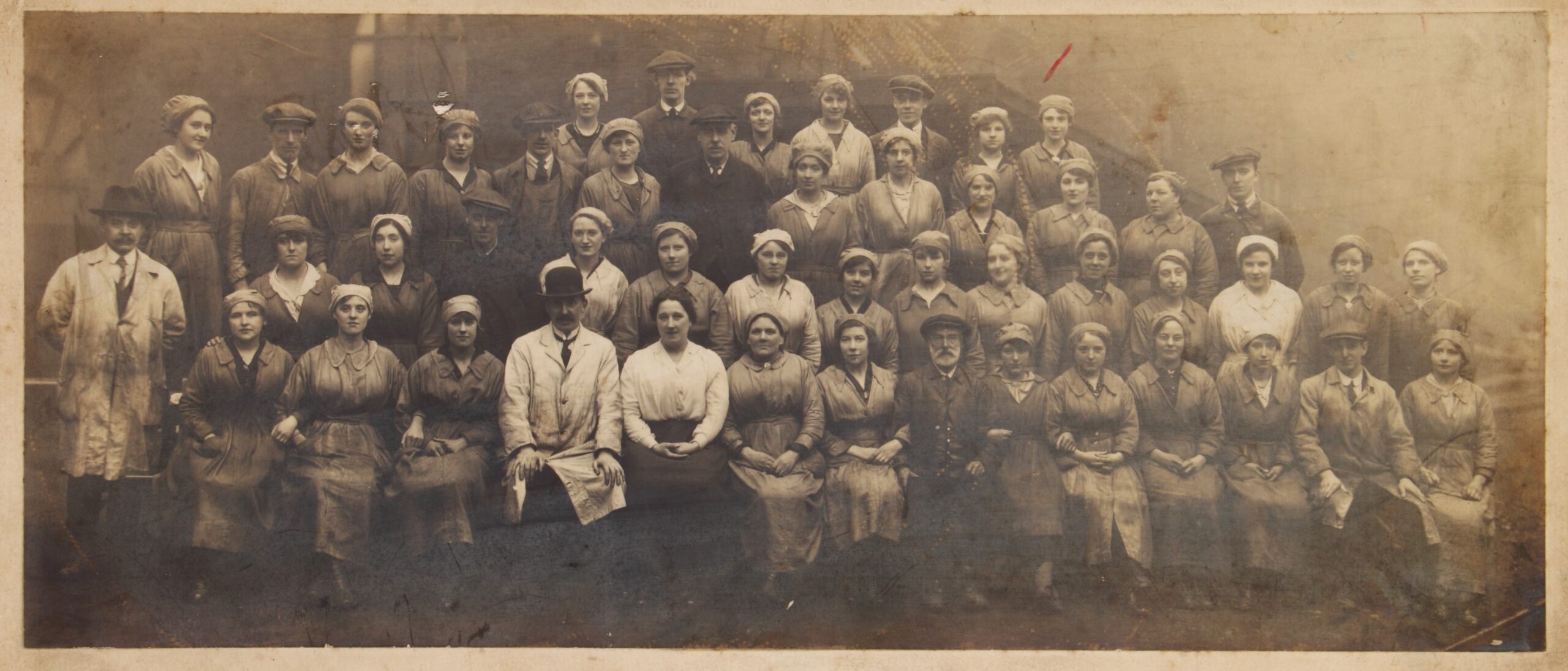
“The Chocolate Room was above the Wrapping Room, I worked in there too with Josie Maher, I can still picture her very clearly, she was bonnie, dark, with lovely black hair. She was a good worker too.“
“Homer didn’t make chocolate, that was bought in, in little blocks, for melting, although he did all the middles, the centres. They would be on a conveyor, the chocolate was still wet and you had to make a little squiggle on them, a fancy pattern, before they got hard.“
“The noise in the factory was tremendous. Of course you weren’t allowed to speak, but some places was impossible to speak anyhow. I’m sure that’s why my hearing’s so bad now. You had to get on with your work all the time. Hard times, and you didn’t get much for a wage either, twelve and six. There was no long holidays then. A day and a half and that was it, the August Bank Holiday Saturday morning and the Bank Holiday Monday.“
“Conditions in the factory weren’t good. The Boiling Rooms as you might expect were red hot, but the Nut Room, where they dried the nuts was worst. There was an old fashioned machine for cracking the nuts, the Brazil nuts that is. You turned this handle and it cracked the nut. The nut fell in to one bowl and the shell in the other. But oh dear me the heat. Mind they were among the best sweets that Horner made the Buttered Brazil’s, and I think about the dearest, but it was torture making them.“
“The hours was half past seven to half past five and if you worked overtime it was half past six, and I had quite a long walk on top of that. Lunch was twelve to one, no other break.
At five o’clock you stopped your machine and washed it down. Washed the floors. You
could eat your dinner off the floor. Everything swilled and scalded and dried down otherwise your toffee stuck next morning. A cup of tea was a penny in the canteen, tuppence for chips, but you could never afford a fish.“
Memories from Stan Hutchinson
“I was working at Newcastle at the time and I got a chance to work at Horner’s. Well saving on travelling in them days was a big thing. I’d served my time at Donkin’s at the bottom of Pilgrim Street. Tinsmiths and plumbers, I went to Horner’s as a tinsmith but went over to the plumbing side.“
“I was 18 years old when I went there in 1922. I got a job straight away, but what a job, repairing the toffee slabs, day in and day out. You wouldn’t believe it but they used to get knocked to pieces. Then I got on to better jobs. When I got married my wage was two pound sixteen and we were living well as anybody else. We started married life here in this house. Well it was handy for the factory. You were home in a crack and didn’t have to bother with taking bait and that. You just nipped home.“
“The hours was eight until half past five. You worked Saturday mornings too mind, and after twelve months you got two and a half days holiday. But us in the Fitting Shop had to work the holiday Easter, Christmas Day, the lot. Cleaning the boiler plus taking things down, dusting them off, ready for when the factory started again. There was five fitters, two electricians and two labourers all on maintenance and you all had to muck in together.“

It was an old factory. It used to be Luccock’s Jam Factory before it was Horner’s. A lot of them buildings was a good age. Rubble built, ancient. The only good buildings were what Horner put up later, the rest was rubbish. Going back further it was a foundry there, which is where the name Foundry Lane come from.
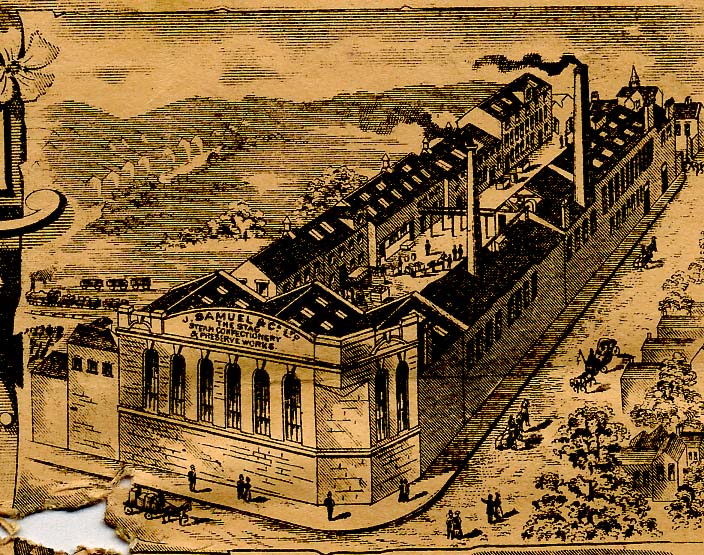
They reckon there was an old pump, still going, in one of the Birtley pits what had been made in that foundry all them years before. Of course up from Foundry Lane was Murray Road and that was the name of the foundry. Murray’s Engine Works.
The pits gone now but certainly that pump from the old foundry was still going strong when I worked at Horner’s. The old buildings were bad but Horner’s was bad land for building on., They had to drive piles to get the new building solid. If you go down six feet there you can get all the water you want. They used tons of cement, bags and bags of it. Slitting the bags and just chucking them in one after the other to try and make it solid.
There was a canteen with a nice brick kitchen, what the army took over during the War, and the canteen too. The soldiers used to feed there. The kitchen was one of the old Belgian huts from Birtley what was put up there in the first World War for the Belgians. Anyway it ended up at Horner’s.
It was a big place mind, you could hold dances in it. Your dinner was from half past twelve to half past one. There was a steam buzzer used to go at starting times, five to eight and twenty five past one. It had a handle and you pulled it to sound the buzzer. Most people took their bait like and had a walk out, or went home.