Flooding History
November 1771 — The Great Flood
The water at Chester-le-Street extended near 200 yards from North to South, in the street, and did considerable damage to dwelling houses and shops there. The mill and most of the mill houses and furniture near Cocken were carried away. The collieries at North Biddick, Chater’s Haugh and Low Lambton on the Wear, were filled with water and upwards of thirty horses in several workings were drowned.
1789 – The Wear was more swollen than at any time since the Great Flood of 1771. In the vicinity of Chester-le-Street all the lowlands contiguous to the river were over-flown, and much damage done to the corn, grass and other lands, by it and the rivulets in the neighbourhood. The iron forge-mill, belonging to Messrs. Hawks & Co. situate on a small rivulet at Braken Hill near Chester-le-Street was entirely swept away by the rapidity of the flood: the damage was computed to be upwards of £800. A skin mill adjoining the forge was at the same time swept away: also, a new bridge lately built by the Earl of Scarborough across the same rivulet, near Lumley Castle. The inhabitants of the lower part of the town of Chester-le-Street, were thrown into great consternation. Several of the houses were flooded to a great height and the passage of the bridge was stopped for some time.
Feb 1822 – A most tempestuous wind with heavy rain blew from the southwest causing considerable flooding in the rivers Tyne, Wear and Tees. In Chester-le-Street the Wear was so swollen that it extended above the arch of the new bridge which is more than a quarter of a mile from the channel of the river.
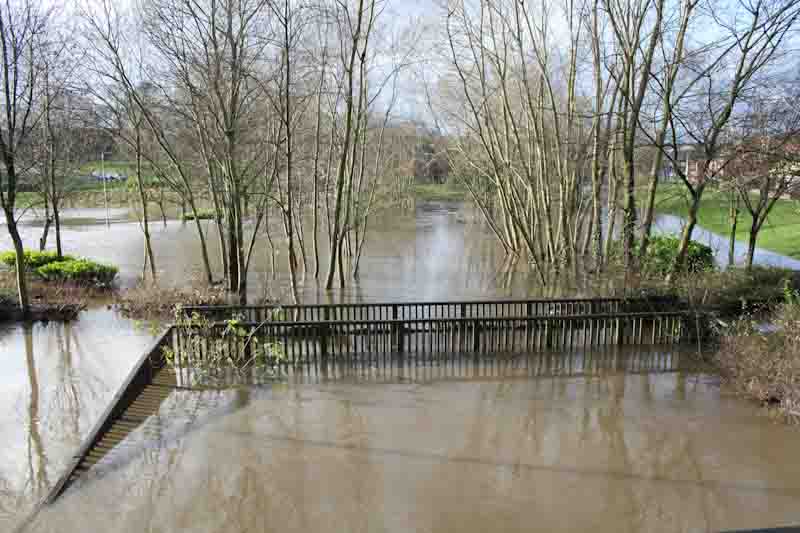
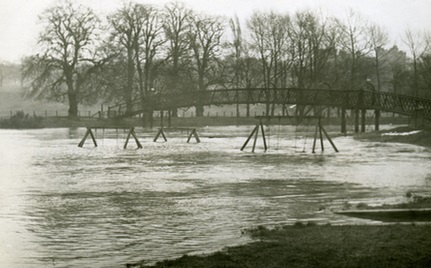
March 29th 1979 — Flooding affected the lower part of Chester-le-Street in the March of 1979 causing much disruption to traffic and pedestrians. Ladies had to be carried by Police Officers to safety.
June 28 2012 – The most recent instance of flooding affecting the Front Street, the Market Place, Cone Terrace and Hopgarth as well as many other areas of the town.

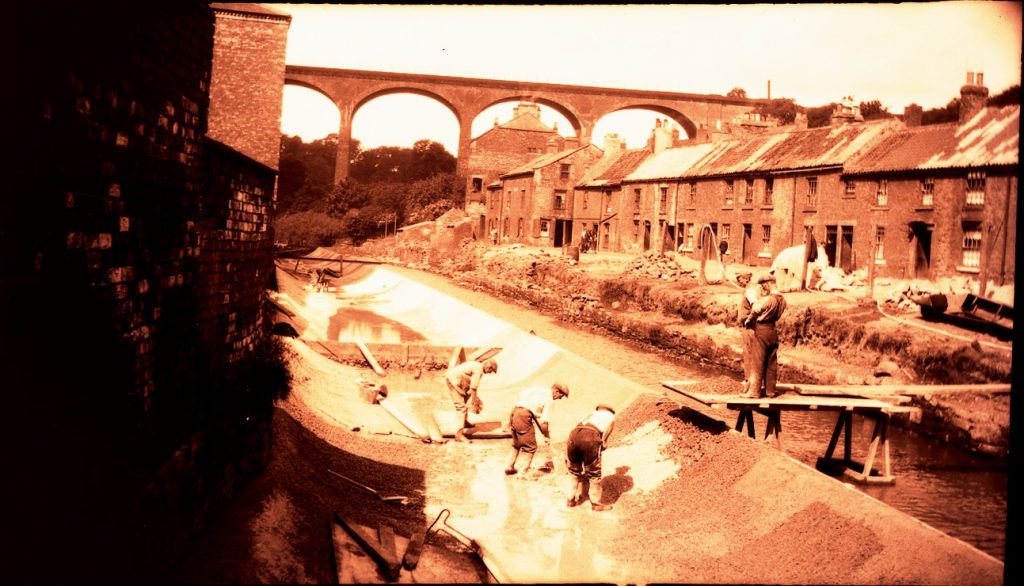
There have been many flood preventions schemes tried over the years with the Cong burn being covered then uncovered a number of times.
In July 2014 a scheme which included the installation of an underground chamber in High Chare and over 200 metres of sewer piping between High Chare and Roman Avenue using ‘trenchless’ technology.
In January a £6.2 million scheme funded by Durham County Council, the Environment Agency and the European Regional Development Fund was started when a section of the burn in the marketplace was again uncovered, and completed in December 2020